

Creatine isn't just for gym bros: what it does for muscle and memory after 40
Dose, form, water weight, kidneys: the questions readers ask most, answered from the studies rather than the label.
Thirty grams before 10 a.m. changes what you eat at 4 p.m. The mechanism is appetite, not magic.
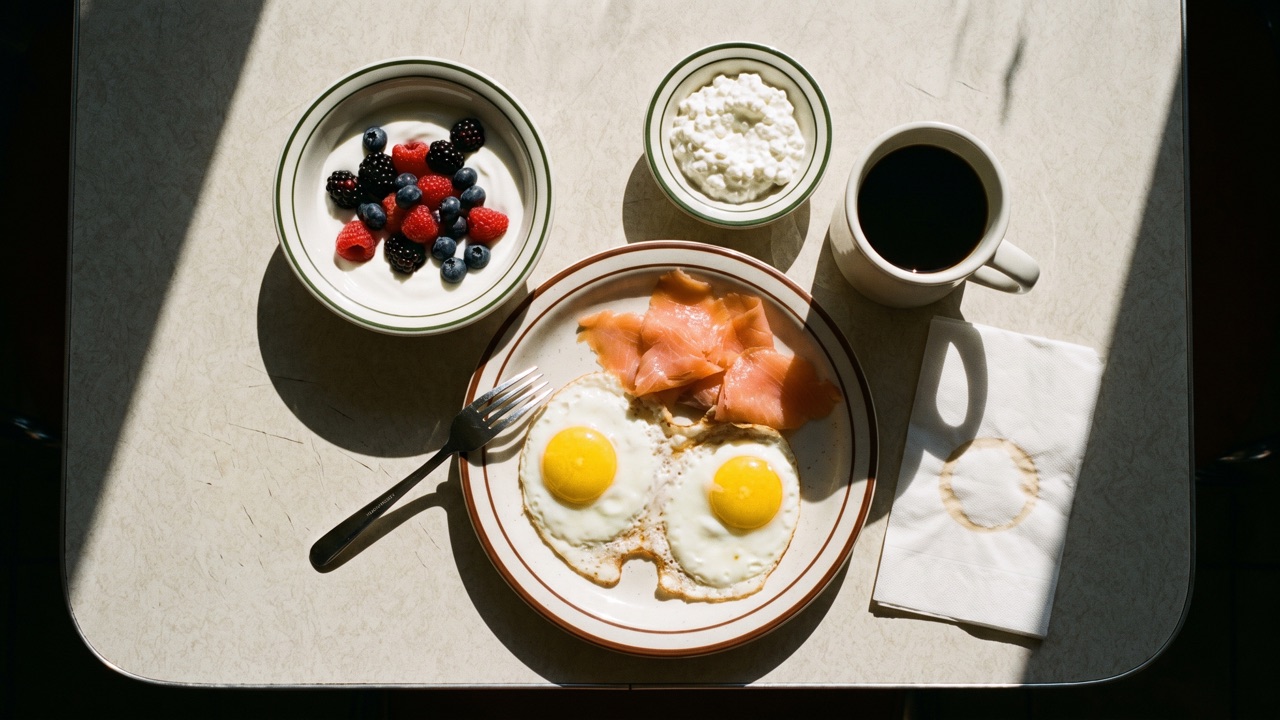
You know the pattern. Coffee at 7, a granola bar on the way out, a reasonable lunch, and then 4 p.m. arrives and something in the break room wins. By dinner you are hungrier than the day should have made you, and the evening is a slow graze.
The usual advice is to eat less at night. The more useful lever sits at the other end of the day: how much protein is in your first meal has a measurable effect on how hungry you are eight hours later.
The number that keeps coming up in the research is around 30 grams: roughly three eggs and half a cup of cottage cheese. Most American breakfasts land at less than half of it.
The clearest work on protein at breakfast comes from Heather Leidy's lab at the University of Missouri. In a 2013 crossover trial, 20 young women with overweight who normally skipped breakfast spent a week each on three routines: no breakfast, a 350-calorie cereal breakfast with 13 g protein, or a 350-calorie egg-and-beef breakfast with 35 g protein. Only the high-protein breakfast reduced evening snacking on high-fat foods compared with skipping. It also raised daily fullness more than the cereal breakfast and shifted the hunger hormones ghrelin and peptide YY in the right direction.
The same group then ran a 12-week randomized trial in 57 breakfast-skipping young adults with overweight or obesity. Those eating a 35 g protein breakfast every day reported less daily hunger, ate roughly 400 fewer calories a day, and gained no body fat. The group that kept skipping gained about 3.5 lb of fat. The 13 g breakfast landed in between and did not reach significance either way.
One honest detail that headlines skip: compared head to head, 35 g versus 13 g was not statistically significant. The strong result is high-protein breakfast versus no breakfast. The result against a low-protein breakfast points the right way but is not proven in that study.
Why 30 grams and not 15? A 2015 review in the American Journal of Clinical Nutrition concluded that higher-protein diets, roughly 1.2 to 1.6 g per kilogram of body weight a day, help with fat loss and with keeping it off, and that about 25 to 30 g per meal is the practical way to get there. For a 165-lb adult that is 90 to 120 g a day, hard to reach if breakfast contributes 8. The federal RDA of 0.8 g per kilogram, about 60 g for that adult, is the minimum to prevent deficiency, not the amount that best manages appetite.
No food and no meal timing removes fat from one spot. Protein at breakfast works, when it works, by trimming total intake over the day, which produces a modest calorie deficit, which reduces body fat everywhere. The belly comes along with the rest.
The encouraging part: visceral fat, the deeper fat around the organs that drives most of the health risk of a larger waist, responds faster than the fat under the skin when weight loss is modest. A systematic review of 61 imaging studies found that with small amounts of weight loss, people lost a larger percentage of visceral fat than of subcutaneous abdominal fat, and that this advantage faded as weight loss grew. A few pounds does disproportionate work on the inside of the waistline.
Approximate values from nutrition labels and USDA data. Your brand may differ by a gram or two.
| Food | Serving | Protein |
|---|---|---|
| Egg, large | 1 egg | 6 g |
| Greek yogurt, plain (Fage Total 5%) | 7-oz cup | 17 g |
| Cottage cheese (Good Culture Classic) | 1/2 cup | 14 g |
| Smoked salmon | 3 oz | 15 g |
| Whole-grain toast | 1 slice | 4 g |
| Hemp hearts | 3 tbsp | 10 g |
| Milk, 2% | 1 cup | 8 g |
| Whey protein powder | 1 scoop | 24 g |
Three breakfasts that reach the target without a shake:
Morning appetite is partly trained. People who eat a lot late in the evening are rarely hungry at 7 a.m. In the 12-week trial, habitual skippers ate a 35 g breakfast daily for three months and their daily hunger went down, not up. Give it two weeks.
The studies also did not require breakfast at dawn. The principle is protein at the first meal. If your first meal is naturally at 10 or 11, make that the 30 g meal and skip the granola bar at 7. If solid food genuinely does not go down early, a scoop of whey in a cup of milk is 32 g and takes 90 seconds.
Four things that turn a good intention into a habit, with US prices as of this writing.
Seventeen grams of protein for under two dollars, the cheapest protein per gram on this page. The 5% is more filling and less sour than the 0%; the 32-oz tub at around $6.50 is cheaper still if you eat it daily.
Fourteen grams per half cup, a short ingredient list and live cultures; it has converted more cottage-cheese skeptics in my circle than any other brand. Roughly double the store-brand price for similar protein.
The most widely tested whey on the market, third-party certified, mixes with a spoon. It is an isolate-led blend, not a pure isolate; single-ingredient grass-fed Naked Whey runs about $1.25 per serving. A powder is a bridge, not a replacement for food.
Weigh the yogurt and cottage cheese for the first two weeks. Most people are surprised how small a real half cup is; the scale is the difference between an actual 30 g breakfast and a hopeful 20 g one.
The breakfast trials are small, 20 and 57 participants, and short, one week and twelve. Participants were 18 to 20 years old, with overweight and a habit of skipping breakfast. Whether a 55-year-old who already eats breakfast gets the same effect from swapping oatmeal for eggs is plausible, but it has not been tested the same way.
The 12-week trial showed prevention of fat gain, not loss of existing fat; the high-protein group held steady while the skippers gained. And the 2013 snacking result came with no difference in total daily calories on the test day. Hormone changes and brain scans are mechanism, not outcome.
No trial has measured belly fat after a high-protein breakfast. The visceral fat argument rests on separate research about modest weight loss in general. It is a reasonable chain of logic, not a single proven result. If you have kidney disease or have been told to limit protein, talk to your clinician before moving to 90 g or more a day.
This article is for general information and is not medical advice. It does not replace a consultation with a clinician who knows your history. Products are named because readers ask; we are not paid to name them unless a page says so. Editorial policy · Medical disclaimer
Dose, form, water weight, kidneys: the questions readers ask most, answered from the studies rather than the label.
Daylight saving time ends Sunday, November 1. Who feels it most, and the three-night plan that starts Thursday.
Blood sugar dips, cortisol answers, you're awake. How to read the pattern and the two dinner changes that quiet it.