Why you wake up at 3 a.m., and what to eat before bed
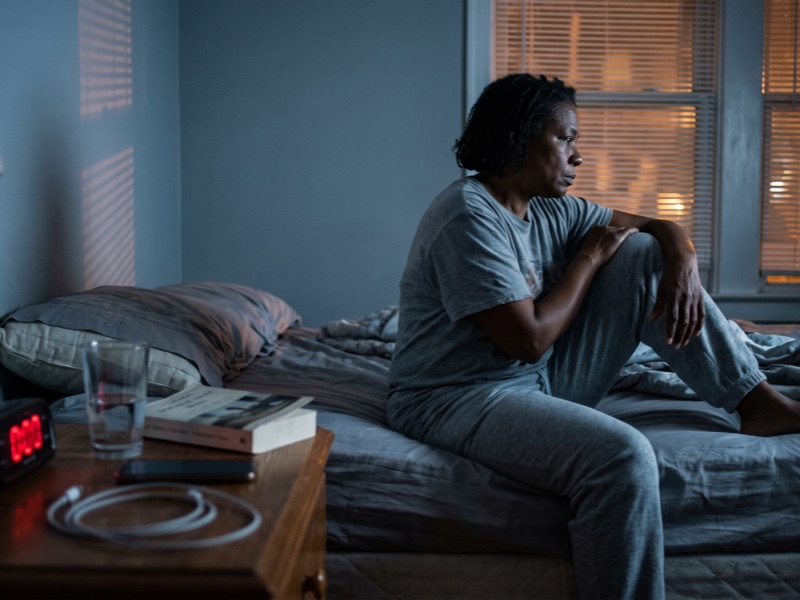
Blood sugar dips, cortisol answers, you're awake. How to read the pattern and the two dinner changes that quiet it.
Enter the time you need to wake up, or the time you are going to bed, and get bed and wake times built from 90-minute sleep cycles, plus how many hours adults, teens and people over 65 actually need.
Times assume about 15 minutes to fall asleep and cycles of 90 minutes. Five cycles (7.5 hours) sits inside the 7 to 9 hours recommended for adults; four cycles (6 hours) is below that floor and is a fallback for a short night, not a target. Real cycles run 70 to 120 minutes, so treat these as starting points.
Pick the number you know. If your alarm is fixed, choose "I want to wake up at." If you know when you will be in bed, choose "I'm going to bed at." The calculator sets aside about 15 minutes for falling asleep, because nobody is asleep the moment the light goes off, and counts sleep in 90-minute blocks.
Why 90 minutes? Your brain cycles through light sleep, deep sleep and REM, then starts again. One pass is a sleep cycle, roughly 90 minutes in adults; four to six make a night.
So the math is: wake time, minus 15 minutes, minus 90 minutes per cycle. For a 6:30 a.m. alarm the sleep cycle calculator suggests bed at 12:15 a.m. for 4 cycles (6 hours asleep), 10:45 p.m. for 5 cycles (7.5 hours) or 9:15 p.m. for 6 cycles (9 hours). The other way, an 11:00 p.m. bedtime gives wake-up times of 5:15, 6:45 or 8:15 a.m.
The idea is that waking at the end of a cycle, in light sleep, feels easier than being pulled out of deep sleep, which produces the grogginess researchers call sleep inertia. To be straight: sleep inertia is well documented, but no large trial shows that timing an alarm this way leaves people better rested. Treat the times as a starting point, not a precision instrument.
Five cycles, or 7.5 hours, is the option most adults should aim for. It sits in the middle of the 7 to 9 hours the National Sleep Foundation recommends for adults 18 to 64 and clears the 7-hour floor the American Academy of Sleep Medicine and Sleep Research Society set in 2015. Six cycles, 9 hours, is the upper end, reasonable when catching up or fighting a cold. Four cycles, 6 hours, falls below the range. It is shown because short nights happen, and complete cycles tend to beat 6 hours 40 minutes cut off mid-cycle. It is not a schedule.
How much sleep you need by age shifts more than most people expect. The ranges below are the National Sleep Foundation's.
| Age group | Recommended sleep per day (NSF 2015) |
|---|---|
| Newborns, 0 to 3 months | 14 to 17 hours |
| Infants, 4 to 11 months | 12 to 15 hours |
| Toddlers, 1 to 2 years | 11 to 14 hours |
| Preschoolers, 3 to 5 years | 10 to 13 hours |
| School age, 6 to 13 years | 9 to 11 hours |
| Teens, 14 to 17 years | 8 to 10 hours |
| Adults, 18 to 64 years | 7 to 9 hours |
| Older adults, 65 and up | 7 to 8 hours |
As a sleep calculator by age: teens need 5 to 7 cycles, adults 5 to 6, and after 65 about 5. Children's cycles are shorter, so the 90-minute math only applies from the teen years on.
Ninety is an average. The StatPearls review of sleep physiology puts the first cycle of the night at about 70 to 100 minutes and later ones at 90 to 120. Cycles can run anywhere from 70 to 120 minutes, and yours differ from night to night. Over five cycles, 10 minutes each adds up to nearly an hour, so no calculator can promise to land your alarm in light sleep.
Healthy adults typically fall asleep within 10 to 20 minutes. If you routinely drop off in 5, or lie awake for 45, shift the bedtime yourself. Under 5 minutes most nights is a sign of sleep debt, not talent.
A couple of drinks help you fall asleep faster and may deepen sleep early on, then fragment the second half and cut into REM. A large meal near bedtime, caffeine after mid-afternoon and a bright phone in bed all delay sleep onset or lighten the early cycles. The calculator assumes an ordinary evening.
This is a scheduling tool for people who sleep normally. It does nothing for insomnia, sleep apnea or restless legs. If you snore loudly, a partner has seen you stop breathing, you are sleepy during the day despite 7 or more hours in bed, or you have woken unrefreshed most mornings for several weeks, see your clinician. Those point to sleep quality, not timing, and both respond well to treatment.
Not a ranking, in no particular order. How we make money.
Bedside light that brightens gradually before your alarm and plays wind-down sounds at night; the hardware works on its own, but some routines and sound libraries sit behind an optional subscription.
Adjustable eye cups that block light without pressing on your eyelids, useful if blackout curtains are not an option; a $10 contoured mask from Amazon does the same job if you sleep on your back.
The cheap option: a silent-tick, battery-powered alarm so the phone can charge in another room; the bell is loud, so heavy sleepers may like it more than their partners do.
Allowing 15 minutes to fall asleep, 10:15 p.m. gives you 5 cycles, or 7.5 hours, which is the target for most adults. 8:45 p.m. gives 6 cycles (9 hours), and 11:45 p.m. gives 4 cycles (6 hours), which is below the recommended range and best kept for the occasional short night.
About 90 minutes on average, but it varies. The first cycle of the night tends to be shorter, around 70 to 100 minutes, and later cycles run 90 to 120 minutes as REM periods get longer toward morning. A typical night holds four to six cycles.
The National Sleep Foundation's 2015 recommendations are 7 to 9 hours for adults 18 to 64, 7 to 8 hours after 65, 8 to 10 hours for teens and 9 to 11 hours for school-age children. The American Academy of Sleep Medicine puts the adult minimum at 7 hours. Needs vary a little from person to person, but very few adults do well on 6.
7.5 hours. Six hours is below the 7-hour minimum in the AASM consensus statement, and regularly sleeping that little is linked with poorer attention, mood and metabolic health. The 6-hour option exists for nights when a longer sleep is not possible, because ending on a completed cycle tends to feel better than waking mid-cycle a little later.
Probably a modest one. Being woken from deep sleep produces sleep inertia, the heavy grogginess that can last 15 to 30 minutes, and waking from light sleep or REM is usually gentler. That part is well documented. Whether a fixed 90-minute count can reliably hit light sleep is less certain, because your cycles vary from night to night.
Usually because the quality was poor rather than the amount too small. Alcohol, an untreated sleep disorder such as sleep apnea, an irregular schedule or a hot, bright bedroom can all leave you unrefreshed after a full night. If it has gone on for several weeks, or you snore loudly or doze off during the day, talk to your clinician.
This calculator is for general information and is not medical advice. Results are estimates from population formulas and can be off for you personally. Talk to a clinician before acting on a number, especially if you take medication or have a diagnosed condition. Editorial policy · Medical disclaimer
Blood sugar dips, cortisol answers, you're awake. How to read the pattern and the two dinner changes that quiet it.
The trial numbers, why timing matters more than distance, and how to fit three short walks into a normal workday.
A shelf audit with prices: what the trials support after 50, what they don't, and what a month of each actually costs.