PDRN: the salmon-DNA ingredient behind Korea's skin-booster trend
From Italian burn units to Seoul clinics to your bathroom shelf: what PDRN is, what it's shown to do, and what to expect topically.
A viral trend with a real fatty-acid profile behind it. Where it helps, where it clogs, and how it compares to the moisturizers it's replacing.
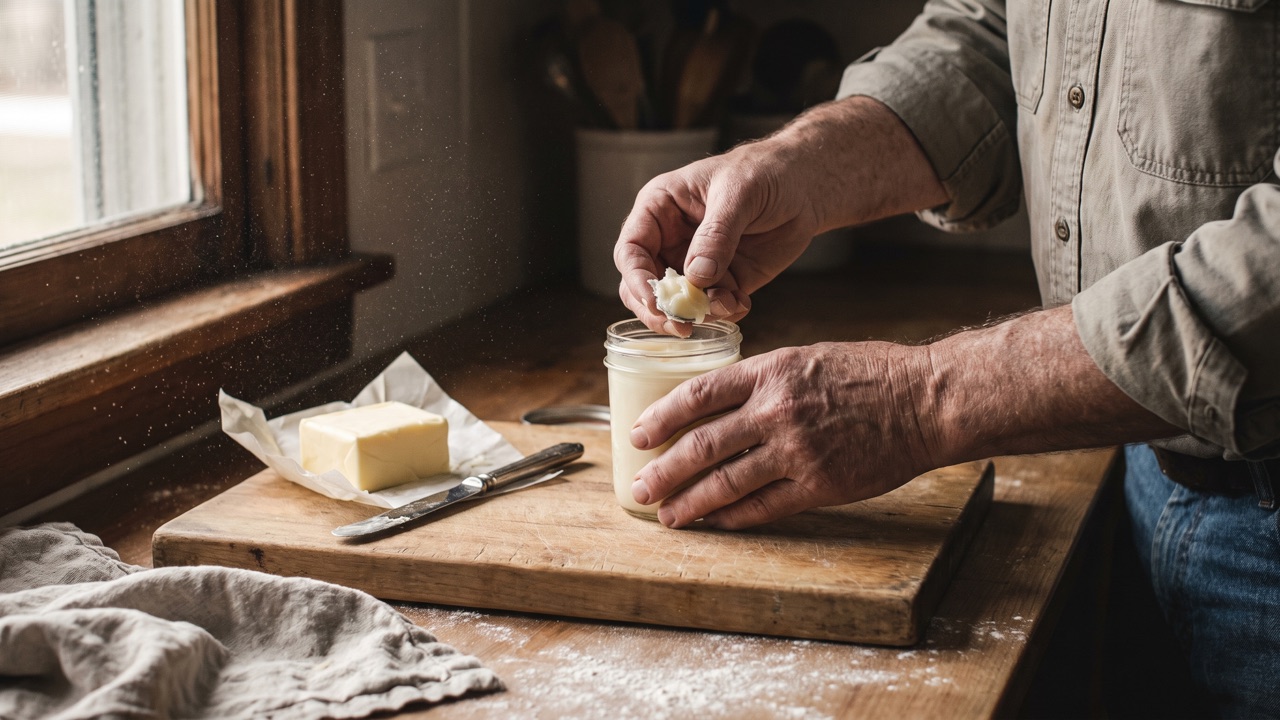
You have probably seen the jar by now. Someone on your feed scoops out a pale, waxy cream, says "this is just beef fat," and tells you their skin has never looked better. The comments are full of people who threw out their moisturizer.
If your skin is tight and flaky by February, the pitch lands: one ingredient, no 30-item label. What the videos skip is how tallow compares to what is already in your bathroom, and why dermatologists keep saying "fine on your shins, careful on your face."
Tallow is rendered beef fat, melted and strained until it sets white. It is nearly 100 percent fat, and the USDA has measured that fat down to the individual fatty acids.
Per 100 grams, beef tallow is about 50 grams saturated fat, 42 grams monounsaturated and 4 grams polyunsaturated. The three big players are oleic acid (about 36 g), palmitic acid (about 25 g) and stearic acid (about 19 g). Linoleic acid, the polyunsaturated fatty acid your barrier actually needs, is around 3 g.
The "packed with vitamins" claim is thinner than it sounds. The same USDA record lists about 2.7 mg of vitamin E per 100 g, a trace of vitamin D, and no measurable vitamin A.
The "it matches your sebum" line is half right. Human sebum does contain palmitic and oleic acid. It also contains squalene, wax esters and a fatty acid called sapienic acid that no cow makes, and the lipids that hold your barrier together are ceramides, cholesterol and free fatty acids in a specific ratio. Tallow supplies none of the ceramides.
Moisturizers do some mix of three jobs: occlusive (seals water in), emollient (smooths the gaps between skin cells) and humectant (pulls water in). Tallow is a solid occlusive and emollient. It has no water and no humectant, so it locks in whatever is already there.
| Option | Main fatty acids or actives | Strength | Sober note |
|---|---|---|---|
| Beef tallow | Oleic, palmitic, stearic; little linoleic | Heavy occlusive, one ingredient | Oleic-rich, no humectant, no ceramides, no clinical trials |
| Petrolatum (Vaseline, Aquaphor) | Mineral hydrocarbons, no fatty acids | Strongest occlusive, near-zero allergy rate | Greasy feel, does nothing beyond sealing |
| Shea butter | Oleic and stearic | Plant-based, softer feel | Also oleic-heavy; same face caution applies |
| Ceramide cream (CeraVe, Vanicream) | Ceramides, cholesterol, glycerin, petrolatum | Copies barrier lipids plus a humectant | Long ingredient list, which some people dislike |
Tallow's closest relative on the shelf is shea butter, not a ceramide cream. Both are mostly oleic and stearic acid, and neither adds water back.
There are no randomized controlled trials of beef tallow on human skin. None for dryness, eczema or wrinkles. When Cleveland Clinic reviewed the trend in early 2026, the conclusion was that there is not enough research to support using it, and that its thick consistency may clog pores and cause breakouts.
What we do have is research on the fatty acids tallow is made of. A 2018 review in the International Journal of Molecular Sciences found a consistent pattern across skin oils: linoleic acid supports the barrier, while oleic acid loosens the outer layer and increases permeability, which is why labs use it as a penetration enhancer.
The clearest human test came from Sheffield. Nineteen adults, some with a history of eczema, applied six drops of olive oil (which, like tallow, is dominated by oleic acid) to one forearm twice a day. After four weeks the treated skin showed a significant drop in stratum corneum integrity and mild redness. Sunflower seed oil, which is mostly linoleic acid, preserved the barrier and improved hydration on the other arm.
That study used olive oil, not tallow, and 19 people is small. But it is why dermatologists do not treat "natural fat" as automatically barrier-friendly. The mix matters, and tallow's leans the wrong way for a compromised barrier.
The public position is fairly uniform. Tallow is an occlusive emollient. On very dry shins, heels and elbows it will do roughly what any heavy balm does: reduce water loss. On an acne-prone face it is a poor bet, because oleic-rich fats are more likely to sit in pores.
The trend gets some things right. The American Academy of Dermatology's advice for dry skin is to use an ointment or cream rather than a lotion, apply it right after the shower, and pick something fragrance-free. An unscented tallow balm on your legs fits all three rules.
The AAD names petrolatum, shea butter, lanolin, mineral oil and jojoba oil as ingredients to look for. Tallow is not on the list, not because it is dangerous, but because nobody has studied it.
Fat oxidizes. Pure tallow has no preservative, and the Cleveland Clinic piece flags that it can go rancid faster than a formulated cream. Rancid fat smells like old crayons, and oxidized lipids are more irritating than fresh ones.
If you try it, buy from a maker who states a use-by date, keep the jar out of the shower steam, and toss it when the smell turns. "Grass-fed" is mostly a sourcing preference; "rendered" and "filtered" are what you want for cleanliness. Unscented beats essential oils, which are the most common allergens in the category.
Patch test first: a pea-sized amount on the inner forearm, once a day for three or four days. Then start on a body area, not your cheeks.
Acne-prone skin. The oleic acid problem applies to your face. A ceramide cream or light gel moisturizer is the safer default.
Rosacea, especially during a flare. Heavy occlusives trap heat, and the Sheffield study saw oleic-rich oil produce mild redness on skin that was not inflamed to begin with.
Fungal acne (Malassezia folliculitis). The yeast feeds on fatty acids. Tallow is a buffet.
Active eczema. The olive oil study's authors concluded that oleic-rich oil could worsen atopic skin. Ask your dermatologist before swapping a prescribed emollient for anything, tallow included.
Not a ranking. Four products we would buy ourselves, in no particular order, each with the plus and one honest caveat. How we make money.
The plus: petrolatum-based, fragrance-free, and the tub most dermatologists reach for when a patient reacts to everything. The caveat: no ceramides and no story, which is exactly why some people skip it.
The plus: a whipped tallow cream rather than a solid balm, so it spreads thin and a small amount covers a dry shin or elbow; unscented, and the 60 ml size means less sits around oxidizing. The caveat: like every tallow product, its case rests on the fatty-acid chemistry and user reports rather than trials, so treat it as an occlusive for dry body skin, not a face cream if you break out. The brand also makes a copper peptide version at $59.99.
The plus: three ceramides, cholesterol, glycerin and petrolatum in one jar, which is the closest a drugstore cream gets to copying the barrier itself. The caveat: a long ingredient list, if that bothers you.
The plus: a straight, grass-fed, unscented tallow balm in a small jar, the honest way to try the trend in its original form. The caveat: a solid balm takes warming between the fingers, and the same no-trial note applies as to every tallow product.
What I do myself: a ceramide cream on my face, a heavy occlusive on my shins in winter, applied wet from the shower. Whether that occlusive is petrolatum or tallow is a preference. The face part is not.
This article is for general information and is not medical advice. It does not replace a consultation with a clinician who knows your history. Products are named because readers ask; we are not paid to name them unless a page says so. Editorial policy · Medical disclaimer
From Italian burn units to Seoul clinics to your bathroom shelf: what PDRN is, what it's shown to do, and what to expect topically.
The retinoid ladder explained in plain English, with the concentrations that matter and the products that actually list them.
A two-minute mirror test, what causes each, and which ingredients have evidence for which problem.