PDRN: the salmon-DNA ingredient behind Korea's skin-booster trend
From Italian burn units to Seoul clinics to your bathroom shelf: what PDRN is, what it's shown to do, and what to expect topically.
Retinol is two conversion steps away from the active form. Retinal is one. That single step is why one works faster at a lower dose.
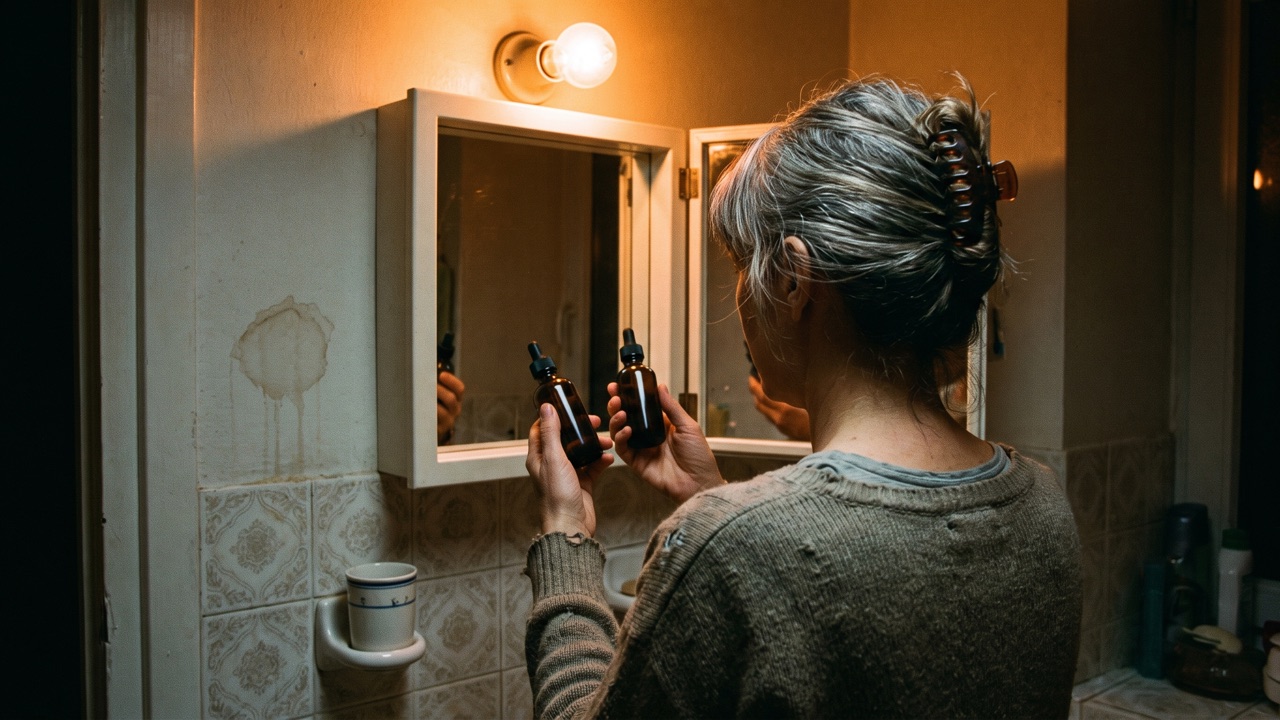
You have probably stood in the skincare aisle holding two bottles that both say "vitamin A" and cost $40 apart. One says retinol. The other says retinal, or retinaldehyde. The labels don't explain the difference, and the copy makes both sound like the strongest thing you can buy without a prescription.
The difference is real, and it comes down to a single chemistry step. Retinol is two steps from tretinoin. Retinal is one. That is the whole story, and once you see the ladder, the prices and percentages on the shelf start to make sense.
Every vitamin A product has to become one molecule before your skin can use it: retinoic acid. Everything else is a precursor that skin enzymes convert, and every conversion loses some of the dose.
| Form on the label | Steps to retinoic acid | Where you get it | Typical strength |
|---|---|---|---|
| Tretinoin (retinoic acid) | 0 | Prescription only in the US | 0.025–0.1% |
| Retinal (retinaldehyde) | 1 | Over the counter | 0.03–0.2% |
| Retinol | 2 | Over the counter | 0.1–1% |
| Retinyl palmitate, retinyl acetate | 3 | Everywhere, often unlisted % | Usually low, rarely stated |
Retinyl esters sit at the bottom: split once, oxidized twice, and in a typical moisturizer mostly there so the box can say "with vitamin A." Retinol is the familiar middle rung. Retinal is the rung just below the prescription.
The step from retinol to retinal is the slow, rate-limited one. The step from retinal to retinoic acid is comparatively fast. A retinal product skips the bottleneck.
That is why the numbers on the bottles look so different. A 2006 review in Clinical Interventions in Aging puts retinol at roughly 20 times less potent than tretinoin. Retinol products compensate with concentration: 0.3%, 0.5%, 1%. Retinal products list 0.05% or 0.1% and are not being modest; less is lost in conversion, so less is needed.
It also explains irritation. In a 1995 University of Michigan study, up to 1.6% retinol and 0.025% retinoic acid were applied to skin under occlusion for four days. Retinol thickened the epidermis about as much as the acid did but produced almost no redness, while retinoic acid raised erythema scores 3.7-fold over vehicle. Precursors are gentler because the skin doses itself gradually. Retinal keeps most of that advantage while giving up less potency.
The trial people cite most is from 1998. Creidi and colleagues compared a 0.05% retinaldehyde cream against 0.05% retinoic acid and against the retinaldehyde vehicle in 125 people with sun-damaged facial skin, measuring crow's feet with silicone replicas and optical profilometry. At 18 weeks, both actives significantly reduced wrinkle and roughness measures; the vehicle did nothing at any point. Retinoic acid caused more local irritation and hurt compliance. Retinaldehyde, in the authors' words, was "efficacious and well tolerated."
That is the study behind the claim that retinal gets close to prescription results with fewer side effects. It is one trial, it measured crow's feet, and by week 44 the gains in both active groups had faded somewhat. Still, it is a real head-to-head against tretinoin, which almost no retinol product can say.
The Geneva group that developed topical retinaldehyde published the groundwork in 1994: in human skin, retinoic acid produced the strongest retinoid response, retinaldehyde came next, retinol trailed. In their tolerance work, 229 patients used 0.05% to 0.5% retinaldehyde with few problems.
Because retinal is stronger per percent, follow the American Academy of Dermatology's advice for any retinoid: the lowest strength you can find, every other night at most. My own rule is two nights a week for two weeks, then three, then every other night if the skin is calm. Peeling and stinging mean slow down, not push through.
Buffer it: moisturizer first, wait a few minutes, then a pea-sized amount for the whole face, then moisturizer again if you like. Keep it off the corners of the nose and mouth, where flaking shows up first. Skip acids and scrubs on retinal nights.
Night only, sunscreen every morning. Retinoids make skin more sensitive to UV, and irritated skin is more likely to darken, especially on medium and deeper skin tones.
One more line that should be on every box. The AAD says retinoids should not be used during pregnancy, and MotherToBaby's fact sheet on topical tretinoin advises avoiding it throughout pregnancy as a precaution, even though skin absorption is small. Retinal feeds the same active molecule. If you are pregnant, trying, or breastfeeding, put the bottle away and ask your OB what to use instead.
Retinal's weakness is that it is even less stable than retinol. The 2006 review describes retinol as "extremely unstable" in light and air, and retinal is more reactive still. Once it has broken down, you are paying for a yellow cream that does nothing.
So the container is not a design choice. Look for an opaque, airless pump or sealed tube; avoid jars and clear droppers. Store it in a drawer, not a sunny windowsill, and finish it within a few months of opening. If the color shifts from pale yellow to orange-brown, it has oxidized.
Three retinal options at three prices, plus a retinol serum for comparison.
A 0.1% retinaldehyde cream from Pierre Fabre, the company behind the 1998 head-to-head trial. The strength matches the studied range and the formula is built for sensitive skin. The price is steep for 1 oz, and the brand's own study is the main evidence.
Encapsulated retinaldehyde in a numbered ladder: Crystal Retinal 3 is 0.03%, 6 is 0.06%, up to 24 at 0.24%. The steps make it easy to start low and move up, and it comes in an opaque airless tube. It is the most expensive route here, and the higher numbers are more than most people need.
The cheap way into retinal, with a published percentage and an opaque tube. The caveat is strength: 0.2% is above the 0.05–0.1% studied range, so this is not a beginner's bottle. Start with a rice-grain amount twice a week, buffered, or skip it if your skin is reactive.
The retinol reference point: encapsulated retinol with ceramides and niacinamide, gentle enough for most first-timers, at a fraction of the retinal prices. CeraVe does not publish the percentage, so you can't compare strength on paper. If retinal irritates you, this is a reasonable rung to step back to.
The ladder itself is settled biochemistry. What is not settled is how much the extra step buys you in a real bathroom over a real year. The 1998 trial is one study of 125 people measuring one wrinkle zone, and the group that developed topical retinaldehyde worked with the company that sells it. Much of the retinal literature comes from that circle.
There are almost no independent head-to-head trials of an over-the-counter retinal against an over-the-counter retinol at the strengths people actually buy. Claims like "11 times faster than retinol" trace back to lab conversion rates, not photographs of faces at 12 weeks. Whether 1% retinol used for a year lands near 0.05% retinal has never been properly tested.
What we'd skip: retinal prices for a product in a clear jar, any "retinol" moisturizer that only lists retinyl palmitate, and the idea that a higher number on the tube is the goal. Consistency and daily sunscreen do more than the last decimal point. And the zero-step version, tretinoin, is a conversation with a dermatologist, not an overseas website order.
This article is for general information and is not medical advice. It does not replace a consultation with a clinician who knows your history. Products are named because readers ask; we are not paid to name them unless a page says so. Editorial policy · Medical disclaimer
From Italian burn units to Seoul clinics to your bathroom shelf: what PDRN is, what it's shown to do, and what to expect topically.
A two-minute mirror test, what causes each, and which ingredients have evidence for which problem.
Oleic acid, stearic acid and the barrier question. What the trend gets right, what it ignores, and who should skip it.