
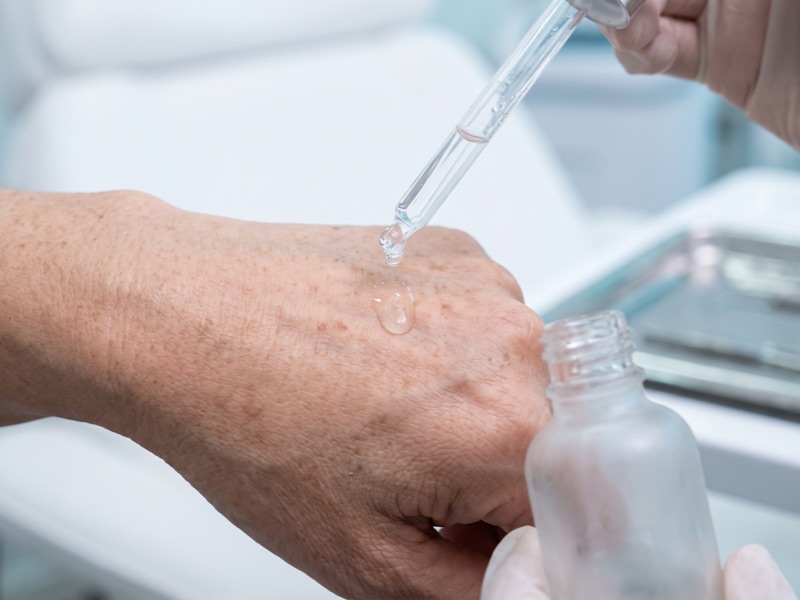
PDRN: the salmon-DNA ingredient behind Korea's skin-booster trend
From Italian burn units to Seoul clinics to your bathroom shelf: what PDRN is, what it's shown to do, and what to expect topically.
One is fluid and fat, the other is pigment and shadow. They look alike in the mirror and need opposite treatment.

You lean into the bathroom mirror, tilt your chin, and there it is again: something under your eyes that wasn't there at 30. Your first instinct is to buy an "eye cream for dark circles and puffiness," because the box promises to handle both.
Here is the problem. Bags and dark circles are not one condition with two names. One is fluid or fat. The other is pigment, blood vessels or a shadow. They sit in the same square inch of skin and need close to opposite approaches, which is why so many eye creams disappoint: they were aimed at the wrong target.
The good news is that you can usually tell which one you have in about two minutes, with no equipment beyond a window and your fingertip.
Under-eye bags come in two kinds, and the calendar tells them apart. Fluid bags are worst first thing in the morning and fade by lunch. Lying flat all night lets fluid pool in the loose tissue under the eyes; a salty dinner, alcohol, a poor night's sleep, a cold or seasonal allergies all make it worse. Mayo Clinic lists exactly these triggers, plus smoking and simple heredity.
Structural bags look the same at 8 a.m. and 8 p.m. As we age, the tissue and tiny ligaments that hold the fat pad behind the lower lid weaken, and the fat slides forward into a soft pouch. Genetics decide when. No cream reaches that fat, and no amount of caffeine drains it, because there is nothing to drain.
Dermatologists who study "periorbital hyperpigmentation" split it into types, and the split matters for what you buy. A Singapore clinic study of 200 patients (Ranu and colleagues, 2011) found the vascular type was the most common, followed by the pigment ("constitutional") type, with post-inflammatory darkening and pure shadow effects making up the rest.
Most people over 40 have a blend, which is why the 2016 review by Vrcek and colleagues in the Journal of Cutaneous and Aesthetic Surgery insists on working out the cause before picking a treatment.
Do this in daylight, once in the morning and once in the evening.
Write down what you saw. Most people have one bag type and one or two circle types, and that decides what to spend money on.
Fluid bags. Cold and caffeine both have a sensible mechanism. Cold constricts vessels and reduces swelling; Mayo Clinic's own advice is a cool compress, less salt, fewer fluids right before bed, sleeping with the head slightly raised and treating allergies. Topical caffeine is a mild vasoconstrictor that penetrates skin well, which a 2013 review in Skin Pharmacology and Physiology summarizes; the effect is real but short, a few hours at most.
Structural bags. Only surgery (lower-lid blepharoplasty, which removes or repositions the fat) changes them permanently. In some cases a filler placed at the hollow below the bag can soften the step and make the bag look smaller. Both are jobs for a board-certified dermatologist or oculoplastic surgeon.
Pigment circles. Daily sunscreen plus a brightener: vitamin C, niacinamide, azelaic acid, kojic acid, or tranexamic-acid-type ingredients, with prescription hydroquinone or a retinoid from a dermatologist for stubborn cases. Studies are small and results modest, so expect months, not weeks. Stop rubbing your eyes; treat the allergy that makes you rub.
Vascular circles. The target is thicker, denser skin so the vessels show less. Retinoids and, with less data, peptides build collagen over time. Lasers aimed at blood vessels are an office option.
Structural shadow. Hyaluronic-acid filler in the tear trough is the standard fix, done by an experienced injector; results last roughly a year. No cream fills a hollow.
Hydrogel patches do something honest: for 15 to 20 minutes they press cool, water-rich gel onto thin skin. The skin plumps with moisture, fine lines look softer, fluid puffiness eases from the cold, and the area looks "visibly" smoother for a few hours. That is a fair reason to use them before a photo or a long day.
What they can't do is move a fat pad, fill a tear trough or fade pigment in one sitting. Patches with brighteners may help over weeks, the way any leave-on product would, but the patch format is not the magic; the daily habit is.
Nobody has run a large, independent trial of any over-the-counter eye cream against under-eye bags. Brand-funded studies typically involve a few dozen people, measure "visible improvement" over 4 to 8 weeks and lack a real control.
The same caution applies to PDRN, collagen, growth factors and "lifting" peptides in patch form: plausible, pleasant, unproven for a protruding fat pad. And if a bag appears suddenly, is painful, red, itchy or one-sided, that is not cosmetic; see a clinician.
Not a ranking. Four products we would buy ourselves, in no particular order, each with the plus and one honest caveat. How we make money.
The plus: a water-light serum with a high caffeine dose, the simplest test of whether your bags are fluid; keep it in the fridge and apply in the morning. The caveat: it does nothing for pigment or a fat pad, and the texture can pill under makeup.
The plus: thirty pairs of hydrogel patches with salmon-derived PDRN, collagen, niacinamide and centella for a 20-minute cooling session, a fair per-pair price for the “visibly smoother today” job, with niacinamide as a nod toward pigment over time. The caveat: PDRN’s topical evidence is still thin, and like every patch it leaves a fat pad exactly where it was.
The plus: fragrance-free, with ceramides, hyaluronic acid and niacinamide in a half-ounce tube; a solid daily moisturizer that makes thin, dry under-eye skin look less crepey. The caveat: it is a hydrator first and won’t shift established pigment on its own.
The plus: the well-known department-store option, 30 pairs built around several weights of hyaluronic acid, pleasant and cooling, with a long record of good reviews. The caveat: close to $2 a pair for hydration, worth it if texture and brand matter to you.
This article is for general information and is not medical advice. It does not replace a consultation with a clinician who knows your history. Products are named because readers ask; we are not paid to name them unless a page says so. Editorial policy · Medical disclaimer
From Italian burn units to Seoul clinics to your bathroom shelf: what PDRN is, what it's shown to do, and what to expect topically.
The retinoid ladder explained in plain English, with the concentrations that matter and the products that actually list them.
Oleic acid, stearic acid and the barrier question. What the trend gets right, what it ignores, and who should skip it.